Review a custom tumbler from artwork proof through sample approval, production checks and packing. Use this buyer checklist to request a precise written quote.
A logo proof and a physical tumbler sample answer different questions. The proof confirms what should be printed; the sample shows what a particular cup, lid, finish and package look like together. This buyer checklist turns a custom tumbler enquiry into a series of approvals before a larger order.
Coolnice lists logo, color, packaging and OEM/ODM options for selected tumbler products. The sequence below is a planning framework, not a guaranteed service, timeline, test result or specification for every model. Confirm the applicable steps, MOQ, price and dates in a written quotation for your exact configuration.
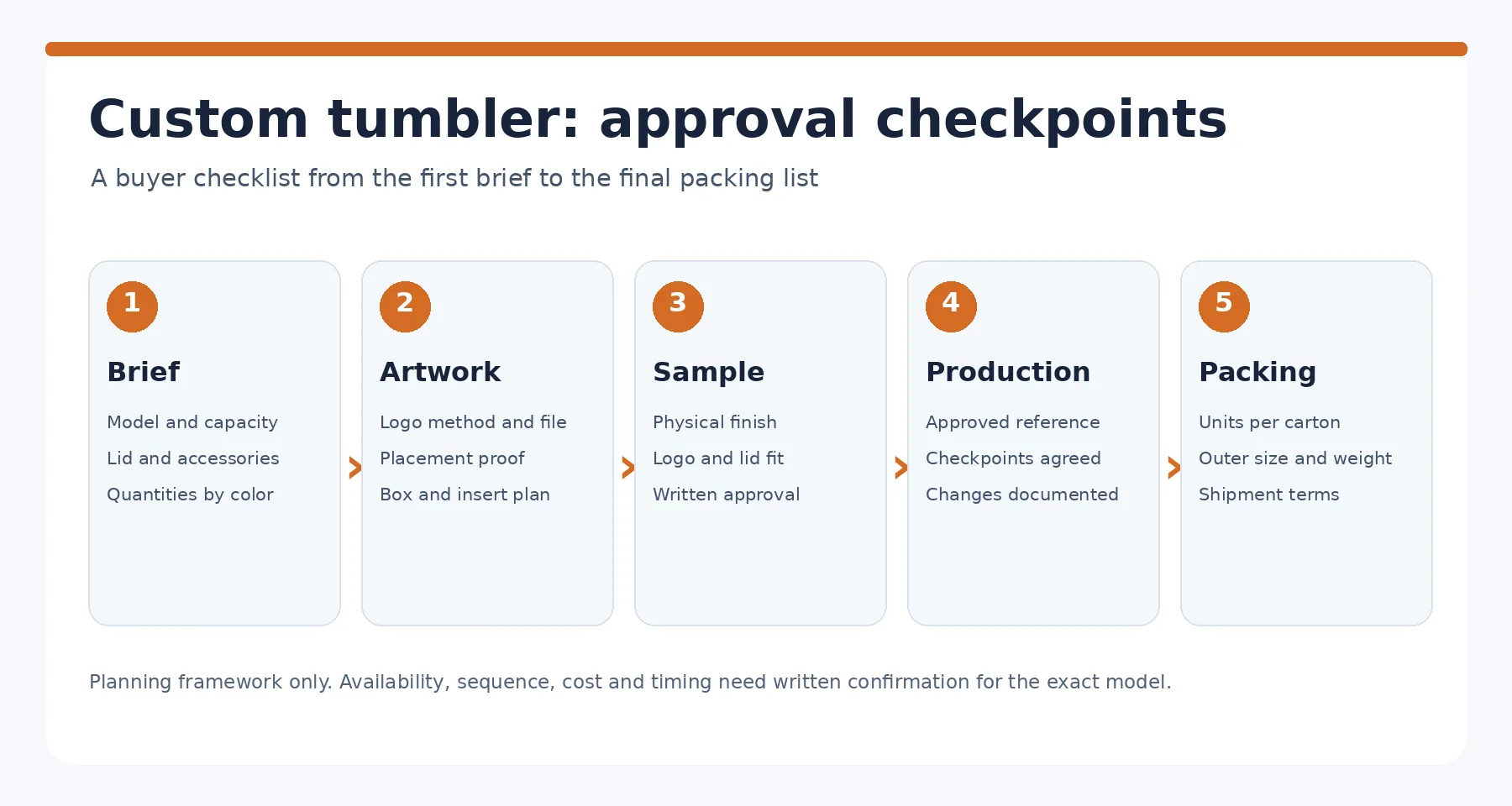
What to approve before custom tumbler mass production
| Checkpoint | Buyer supplies | Request in writing before moving on |
|---|---|---|
| 1. Product brief | Model link, capacity, quantity by color, destination and use case | Exact model and lid, options available, MOQ by configuration and itemized quote |
| 2. Artwork and packaging proof | Vector logo if available, color references, box artwork and barcode needs | Placement dimensions, decoration method, proof version and box contents |
| 3. Physical sample | Approved digital proof and evaluation criteria | Sample type, cost and timing; written approval of logo, finish, lid fit and package |
| 4. Production reference | Approved sample or signed specification with revision date | How changes are handled, inspection scope and agreed acceptance criteria |
| 5. Final packing list | Delivery destination and shipping terms | Units per carton, carton count, outer size, gross weight and documents |
1. Freeze the exact cup and accessory configuration
Start with a product link or photo and specify the usable capacity you want to confirm, lid style, handle, straw, surface finish and accessories. A change from a standard cup to another lid or gift box may alter price, packaging and carton count. The 30 oz versus 40 oz guide helps compare capacities; the gradient tumbler is one style you can use as a starting reference. Ask Coolnice to identify the exact SKU and available options rather than assuming every pictured finish can be combined.
2. Approve artwork and the complete pack
Send a clean logo file and specify the size, position, number of colors, orientation and whether each side differs. Request a dated placement proof that names the decoration process. Review retail packaging separately: outer box, insert, care leaflet, barcode and any required language. The logo and packaging guide covers decisions to include in that approval. A rendered mockup is useful for alignment but does not replace a physical sample when finish or durability matters.
3. Sign off the sample against a short checklist
Ask whether the offered sample is a stock undecorated cup, a decorated sample or a preproduction sample made with the final pack. Check visible color and logo placement, surface condition, lid and straw fit, stability, and the contents of the individual box. Record sample photos and a version code. If you plan to advertise insulation time, food-contact compliance or leak resistance, request applicable evidence for the selected model and its test conditions. Do not infer a claim from an unrelated product listing.
4. Control revisions before and during production
Send one final written approval showing the cup configuration, artwork revision, packaging revision, quantity split and acceptance criteria. If anything changes later, ask for an updated proof, cost and schedule before approving the change. Agree whether visual checks, measurements or a third-party inspection are needed for this order; do not treat an illustrative checklist as a factory QC report.
5. Check packing and shipment details
The final sealed master carton determines shipment volume. Request units per carton, number of cartons, outside dimensions and gross weight for each packaging variant. Use the carton volume (CBM) guide for the arithmetic, replacing its example numbers with your packing list. Ask the seller and forwarder to confirm trade terms, chargeable weight, documents and freight price separately.
Send a brief that can be quoted
Use the custom tumbler RFQ template to send your product, logo, sample, packing, quantity and destination requirements in one message. Request a quote that separates sample, decoration, packaging, tooling if applicable and freight. Retain the approved files with the order so both parties refer to the same version.
Frequently asked questions
Is a digital mockup enough to approve the final cup?
It can confirm layout, but a physical sample is the better way to inspect finish, print appearance, lid fit and packaging. Ask what kind of sample is available for your model.
Does every custom tumbler need a new mold?
No universal rule applies. Printing on an existing model and changing a cup’s shape have different requirements. Ask if tooling is necessary for your specific request and have it itemized.
How long does sampling or production take?
The schedule depends on stock, logo method, packaging, quantity and approvals. Request dated milestones in the written quotation rather than relying on a generic estimate.